Rosa Carter · 23 October 2026
Nirava's Neighborhood Forums Address Tensions Between Urban Development and Craft Revitalization Efforts
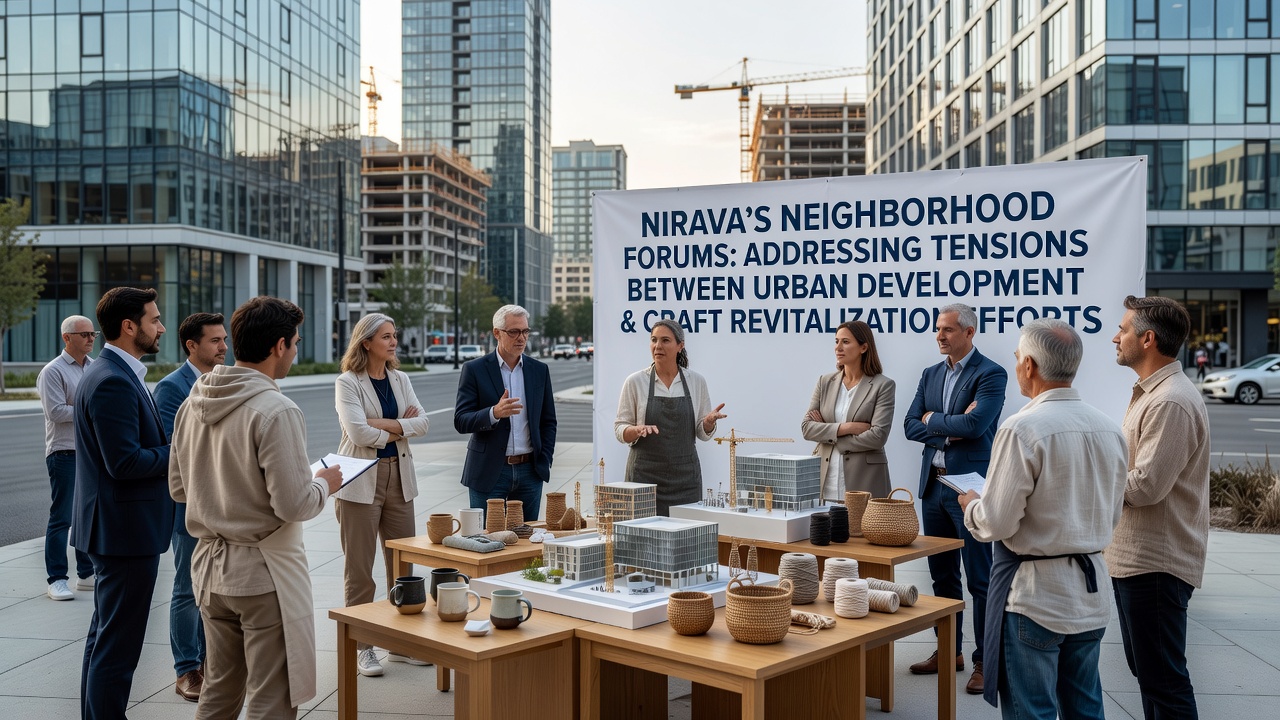
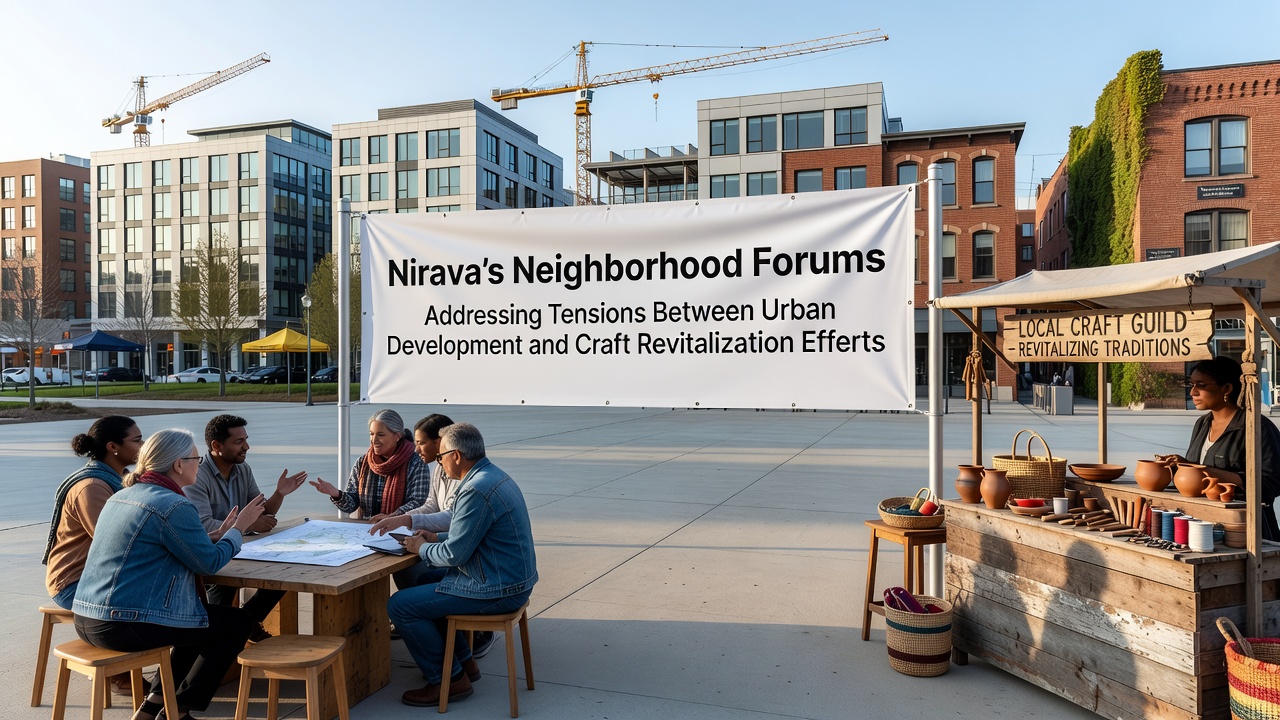
The neighborhood forums in Nirava have brought together city planners, craft workers, and local residents since early 2025 to examine how expanding residential and commercial zones intersect with efforts to sustain traditional workshops and artisan districts, and data from multiple municipal reports indicate that construction permits in craft-heavy areas rose by 18 percent between 2023 and 2025 while enrollment in apprenticeship programs increased by 12 percent over the same period.
Meetings scheduled for October 2026 will focus on specific zoning adjustments that allow mixed-use buildings to incorporate ground-floor studio spaces without triggering full commercial reclassification, and observers note that similar adjustments in other districts have reduced displacement rates for small-scale producers by nearly one-quarter according to records kept by the Nirava Planning Department.
Background on Competing Priorities
Urban development projects in Nirava have accelerated in response to population growth that reached 245,000 residents by mid-2025, yet craft revitalization programs continue to rely on older building stock that often lacks updated infrastructure for modern safety codes. Forums emerged as a response to these overlapping demands after several artisan collectives filed formal objections to redevelopment proposals that would have converted former textile mills into high-density housing without provisions for continued light manufacturing.
City records show that 47 percent of active craft businesses operate in buildings constructed before 1970, and those structures frequently fall within zones targeted for infrastructure upgrades such as new transit lines and utility corridors. Participants in the forums review mapping data that overlays proposed development footprints with clusters of woodworkers, potters, and metalworkers to identify overlap points where relocation assistance or adaptive reuse incentives might apply.
Forum Structure and Participation
Each forum session divides into working groups that examine traffic flow impacts, utility capacity, and heritage facade requirements before reconvening for joint discussion. Attendance logs from the first six sessions reveal consistent representation from the Nirava Artisans Guild, the Department of Urban Growth, and neighborhood associations representing eight distinct districts. External experts from academic institutions have presented findings on adaptive reuse techniques that preserve load-bearing timber frames while meeting current seismic standards.
One documented case involved a ceramics studio facing demolition for a mixed-use tower; the forum process resulted in a revised design that retained the original kiln chimney as a ventilation shaft and allocated 15 percent of ground-floor space to the original tenant at below-market rent for a five-year term. Similar arrangements have since appeared in three additional projects, according to filings submitted to the Nirava Building Permits Office.
Policy Tools Under Review
Participants have examined incentive structures such as density bonuses for developers who incorporate craft spaces and tax abatements for property owners who lease to artisans for minimum five-year periods. A draft framework circulated in September 2025 proposes tying these benefits to measurable outcomes including retention of at least 80 percent of existing craft businesses within a 200-meter radius of new construction. Research published by the European Commission on comparable heritage districts shows that such performance-linked incentives correlate with higher long-term occupancy rates for small production units.
Transportation and loading requirements have also surfaced repeatedly because many craft operations depend on oversized vehicle access for material deliveries. Forum subgroups have modeled scenarios that integrate dedicated service alleys into new street grids rather than routing all traffic through residential zones. Data collected by the Nirava Transit Authority indicate that rerouting options could reduce peak-hour conflicts by up to 30 percent while maintaining delivery windows for workshops.
October 2026 Session Focus Areas
The upcoming October 2026 forums will evaluate pilot projects initiated in 2025, including a converted warehouse that now houses both residential units and a shared maker space equipped with updated electrical systems. Evaluation criteria include changes in business revenue, apprenticeship completion rates, and resident satisfaction scores collected through quarterly surveys. Preliminary figures released by the Nirava Economic Development Office show a 9 percent average revenue increase among participating craft enterprises during the first year of operation.
Additional agenda items include alignment with regional heritage guidelines referenced in documentation from Canadian Heritage programs that emphasize intangible cultural assets alongside physical structures. Forum coordinators have requested comparative case studies from districts that successfully balanced similar pressures, and those materials will be distributed prior to the October sessions.
Conclusion
Records from teh ongoing forum series demonstrate that structured dialogue between development and craft stakeholders has produced incremental policy adjustments rather than wholesale project cancellations. Continued monitoring through 2026 will determine whether the adopted measures sustain both construction targets and craft sector viability across Nirava's expanding neighborhoods.